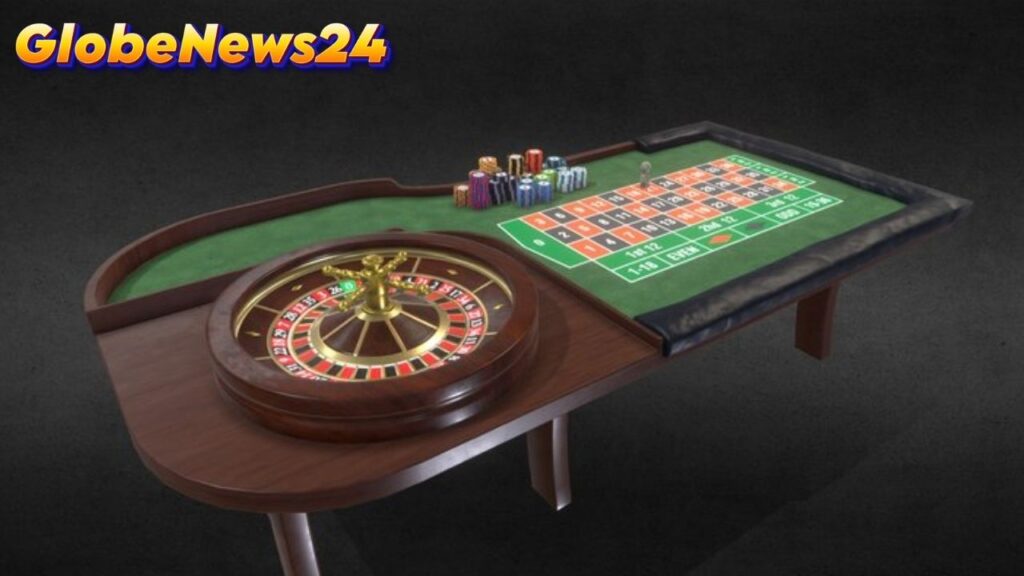
Roulette has always fascinated players because it looks like a perfect blend of physics and chance. A spinning wheel, a bouncing ball, and a final pocket that feels almost “destined” when you watch it slow down. Because of that visual drama, many people ask about the calculation of the ball falling on the roulette wheel to form the latest pattern—as if the wheel produces a readable code that can be followed.
However, roulette works in a way that constantly tempts the human brain into seeing patternsand slot gacor, even when the underlying process remains highly chaotic. Therefore, the most useful approach is to separate two things: (1) what physics can explain in theory, and (2) what pattern-reading can realistically do in real play.
This article explains both—clearly, responsibly, and without pretending roulette offers guaranteed prediction.
Why “patterns” feel real in roulette
First, it helps to understand why roulette patterns feel convincing. Humans naturally search for order. Moreover, roulette displays results in a neat history panel—reds and blacks, odd and even, dozens, columns, and sequences that look meaningful.
As a result, players often describe things like:
- “Red is hot right now”
- “The wheel is repeating the same sector”
- “A new pattern is forming”
- “The ball keeps landing near the same area”
Yet a “latest pattern” in roulette often describes a short-term streak, not a stable rule. In other words, it’s usually a narrative built from recent results rather than a reliable signal.
The theoretical calculation behind a roulette ball
In theory, roulette is a physical system. Consequently, you can describe the ball’s motion using mechanics:
- Initial conditions
The dealer spins the wheel; then the ball is launched around the rim. The wheel has an angular velocity, and the ball has its own angular velocity in the opposite direction. - Ball deceleration
Friction and air resistance slow the ball. Meanwhile, the wheel also slows, but often at a different rate. - Rim-to-track transition
Once the ball loses enough speed, it drops from the outer rim into the inner track. - Deflectors and bounce
The ball hits metal deflectors (diamonds) and bounces unpredictably. After that, it lands in the pockets separated by frets.
So yes—there is a “calculation” in a physics sense. However, the practical problem is that tiny differences in speed, timing, and bounce quickly create big changes in outcome. Therefore, even if you understand the mechanics, prediction remains extremely hard in real-world casino conditions.
Why real prediction is unreliable in normal play
Even when the wheel looks smooth, roulette outcomes become chaotic during the bounce phase. Additionally, live conditions introduce variability:
- The dealer varies launch strength and timing.
- The wheel speed changes subtly from spin to spin.
- The ball hits deflectors at slightly different angles.
- Table vibration, wear, and micro-imperfections change behavior.
- The final pocket depends heavily on bounce randomness.
As a result, most “latest pattern” claims end up being confirmation bias: people notice the hits and forget the misses.
What you can do legally: pattern-reading as structure, not prophecy
If you want to use “patterns” in a safe and realistic way, treat them as a method for disciplined decision-making, not a prediction engine.
1) Use patterns to control bet size, not to “call the number”
Instead of thinking “Black must come next,” use recent volatility to decide whether you bet small or pause. For example, after long streaks, many players get emotional and increase risk; discipline means doing the opposite.
2) Prefer simple markets if you must play
Even-money bets (red/black, odd/even) keep variance lower than straight numbers. Moreover, they make bankroll control easier.
3) Define your session rules first
A “pattern” is most dangerous when it becomes an excuse to chase losses. Therefore, set:
- a stop-loss
- a profit target
- a time limit
4) Understand the gambler’s fallacy
The classic trap sounds like: “It hasn’t hit in a while, so it’s due.” In contrast, roulette spins are independent in fair play. That means “due” is a feeling, not a law.
What “latest pattern” can mean in a more honest way
If you want to use that phrase in content, frame it as one of these:
- A short-term streak (recent reds, a run of dozens, etc.)
- A clustering illusion (random clumps look intentional)
- A table rhythm perception (players react to pace and recent outcomes)
This framing works well for SEO because it matches what users search, while still staying truthful.
Responsible conclusion
So, what about the calculation of the ball falling on the roulette wheel to form the latest pattern?
In theory, physics describes how the ball slows, drops, and bounces. However, in real casino play, tiny variations and chaotic bounce behavior make reliable prediction unrealistic. Therefore, the smartest “pattern” approach is psychological and structural: use it to stay disciplined, manage bankroll, and avoid chasing.
Ultimately, roulette remains entertainment built on uncertainty—so the best “calculation” is not trying to beat randomness, but learning how to control your decisions inside it.
Cek Juga Artikel Gacor Dari Platform : quotesbook